Dark Spots & Hyperpigmentation: A Pakistani Dermatologist’s Complete Guide
If you’ve ever struggled with stubborn dark spots that refuse to fade — post-acne marks, sun damage, melasma — you’re not alone.
Hyperpigmentation is one of the most common skincare concerns in Pakistan, especially among people with melanin-rich skin (Fitzpatrick skin types IV-VI, which most South Asians fall into).
The good news? With the right ingredients and consistent use, dark spots CAN fade significantly.
The bad news? Many treatments marketed for hyperpigmentation either don’t work or make it worse for darker skin tones.
As a dermatologist who has spent years treating Pakistani skin, I’m breaking down everything you need to know about hyperpigmentation — the science, what works, what doesn’t, and how to fade those stubborn marks for good.
What Is Hyperpigmentation?
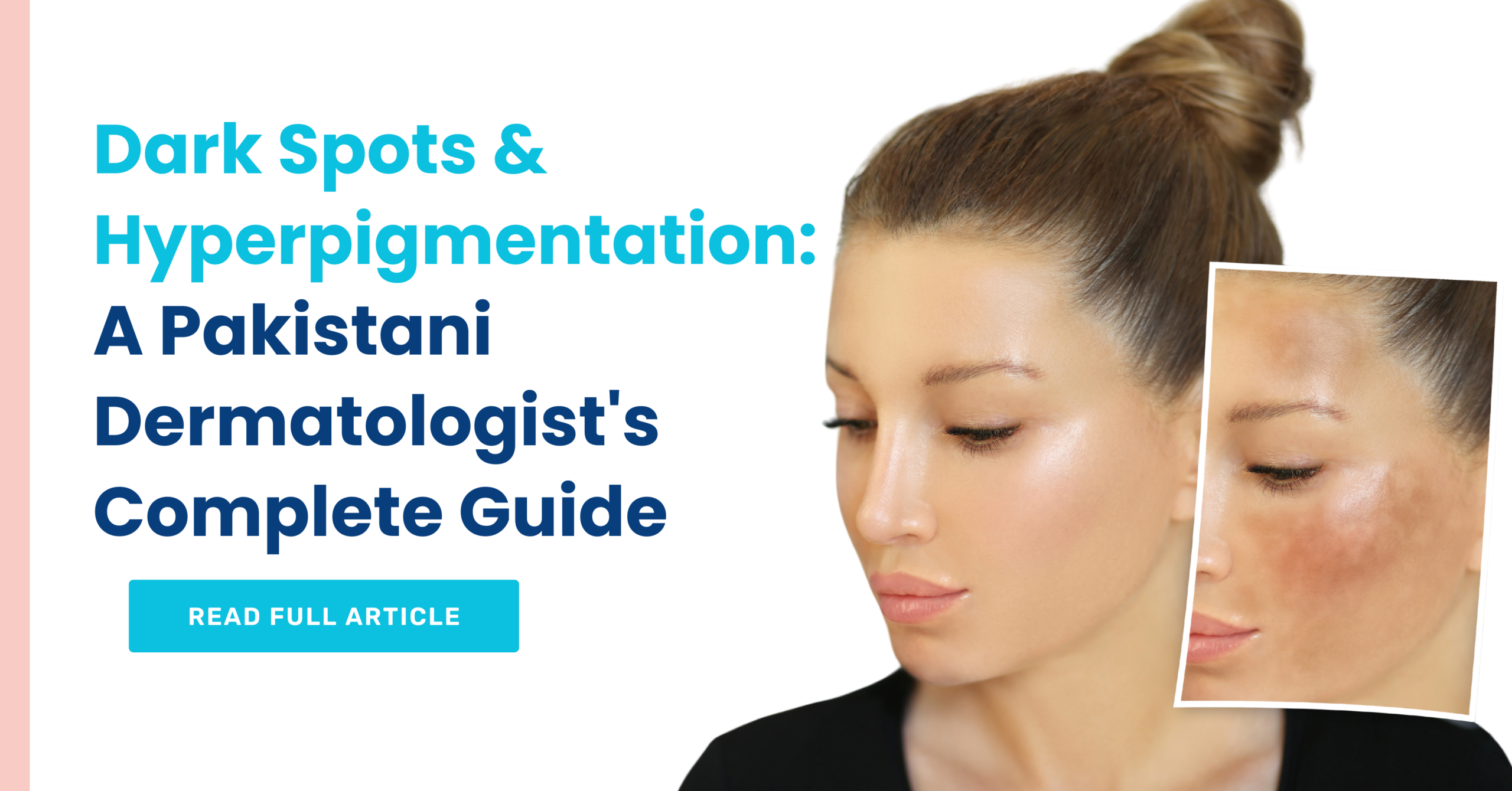
Hyperpigmentation occurs when melanocytes (pigment-producing cells) produce excess melanin in certain areas, causing dark patches or spots.
Types of Hyperpigmentation:
1. Post-Inflammatory Hyperpigmentation (PIH)
Dark marks left behind after acne, cuts, burns, or any skin injury.
Most common in: South Asian skin
Duration: Can last 6 months to 2+ years without treatment
2. Melasma
Symmetrical brown patches, usually on cheeks, forehead, upper lip.
Triggers: Hormones (pregnancy, birth control), sun exposure
Most common in: Women, especially during/after pregnancy
3. Sun Spots (Solar Lentigines)
Flat brown spots from cumulative UV damage.
Most common in: People with years of unprotected sun exposure
4. Freckles
Genetic, usually lighten with sun avoidance.
Why Hyperpigmentation Is More Stubborn on Pakistani Skin
South Asian skin (Fitzpatrick types IV-VI) has more active melanocytes than lighter skin tones. This means:
✓ More melanin production = harder to fade
✓ Higher risk of PIH after any injury or inflammation
✓ Longer healing time for dark marks
✓ Greater sensitivity to harsh treatments (which can worsen pigmentation)
The key: Gentle, consistent, science-backed treatments — NOT aggressive peels or harsh bleaching creams.
What ACTUALLY Works for Dark Spots (Backed by Science)
1. Niacinamide (Vitamin B3) — The Gentle Brightener
How it works:
- Inhibits melanin transfer from melanocytes to skin cells
- Reduces existing pigmentation gradually
- Prevents new dark spots from forming
- Strengthens skin barrier (crucial for preventing PIH)
Clinical evidence:
Studies show 5% niacinamide can reduce hyperpigmentation by 35-40% over 8 weeks.
Why it’s perfect for Pakistani skin:
- Gentle enough for daily use
- No risk of worsening pigmentation (unlike hydroquinone)
- Works on all skin types
- Safe during pregnancy/nursing (with doctor approval)
The ideal concentration: 5% Niacinamide
My recommendation:
Elyria’s Brightzen Serum contains exactly 5% Niacinamide + Hyaluronic Acid. Formulated specifically to fade dark spots while hydrating and strengthening skin barrier.
2. Vitamin C (L-Ascorbic Acid) — The Antioxidant Brightener
How it works:
- Inhibits tyrosinase (enzyme that produces melanin)
- Fades existing dark spots
- Protects against UV damage and pollution
The ideal concentration: 10-20% L-Ascorbic Acid
How to use:
Apply in the morning before sunscreen. Can be layered with niacinamide (myth: they can’t be mixed — FALSE).
Caution: Some vitamin C serums oxidize quickly (turn brown). Store in a cool, dark place.
3. Alpha Arbutin — The Tyrosinase Inhibitor
How it works:
- Blocks melanin production
- Gradually fades dark spots
The ideal concentration: 1-2%
Why it’s good for Pakistani skin:
Gentler than hydroquinone, no risk of ochronosis (darkening from long-term hydroquinone use).
4. Azelaic Acid — The Multi-Tasker
How it works:
- Reduces melanin production
- Fights acne (bonus!)
- Anti-inflammatory
The ideal concentration: 10% (OTC) or 15-20% (prescription)
Great for: Acne + PIH combo
5. Retinoids — The Cell Turnover Booster
How it works:
- Speeds up cell turnover, pushing pigmented cells to surface faster
- Increases collagen production
Options:
- OTC Retinol: 0.25-1%
- Prescription Tretinoin: Stronger, requires dermatologist
How to use:
Start 2-3x per week at night. Build tolerance slowly.
Pro tip: Combine with niacinamide (apply niacinamide first, wait 20 min, then retinol) to reduce irritation.
6. Sunscreen — THE Most Important Step
Here’s the truth: You can use the best brightening serums in the world, but if you don’t wear sunscreen daily, your dark spots will NEVER fade.
UV exposure triggers melanin production. Every. Single. Day.
Requirements:
- SPF 30+ minimum
- Broad spectrum (UVA + UVB protection)
- Reapply every 2-3 hours if outdoors
For Pakistani climate: Choose lightweight gel or fluid formulas that don’t feel heavy.
Ingredients to AVOID for Dark Spots
❌ Hydroquinone (Long-Term)
While effective short-term, prolonged use can cause ochronosis (paradoxical darkening) on melanin-rich skin. Limit to 3-4 months max under dermatologist supervision.
❌ Lemon Juice/DIY “Natural” Remedies
Extremely irritating, can cause chemical burns and worsen pigmentation.
❌ Harsh Scrubs
Inflammation = more melanin production = more dark spots. Avoid.
❌ Unregulated “Whitening” Creams
Many contain mercury, steroids, or unknown ingredients. Dangerous and illegal.
The Ideal Dark Spot-Fighting Routine
Morning:
- Gentle cleanser
- Vitamin C serum (optional but recommended)
- Brightzen Serum (5% Niacinamide + HA) — brightens, hydrates, prevents new marks
- Moisturizer
- SPF 30+ sunscreen — NON-NEGOTIABLE
Night:
- Double cleanse
- Brightzen Serum
- Retinol or Tretinoin (2-3x/week)
- Moisturizer
Additional (2-3x/week):
- Azelaic acid or glycolic acid (alternate with retinol nights)
When to Expect Results
Week 1-2: Improved hydration, smoother texture
Week 4-6: Dark spots start to lighten gradually
Week 8-12: Noticeable fading, more even skin tone
3-6 months: Significant improvement (80% of marks faded)
Important: PIH can take 6+ months to fade completely. Patience is key.
Professional Treatments (For Faster Results)
If at-home treatments aren’t enough, consider:
1. Chemical Peels
Professional-strength glycolic, lactic, or mandelic acid peels.
Caution: Must be done by experienced dermatologist familiar with darker skin tones.
2. Laser Treatments
Q-switched Nd:YAG laser is safest for Pakistani skin.
Avoid: Aggressive lasers (can cause post-inflammatory hyperpigmentation).
3. Microneedling + Serums
Stimulates collagen, enhances product penetration.
Always consult a board-certified dermatologist before professional treatments.
Why Brightzen Serum Is My Top Pick for Dark Spots
After years of treating hyperpigmentation in Pakistani patients, I formulated Brightzen specifically for our skin:
✓ 5% Niacinamide — clinically-proven to reduce dark spots by 35-40%
✓ Gentle for daily use — no risk of worsening pigmentation
✓ Strengthens barrier — prevents new PIH from forming
✓ Hydrates deeply — barrier health = faster healing
✓ Plays well with other actives — Vitamin C, retinol, acids
✓ Suitable for all skin types — even sensitive, melanin-rich skin
✓ Transparent ingredients — full INCI disclosure, no hidden bleaching agents
✓ Honest pricing — ₨2,699 for science-backed results
Real Results Timeline (What to Expect)
Using Brightzen + Sunscreen Daily:
- Week 2: Skin feels more hydrated, texture smoother
- Week 4: New acne marks fade faster than usual
- Week 6: Older dark spots start lightening
- Week 8: Visible brightening, more even tone
- Week 12: Significant improvement, friends notice
Remember: Consistency beats intensity. Daily use of gentle, effective ingredients (5% niacinamide) wins over sporadic use of harsh treatments.
Common Mistakes That Worsen Dark Spots
Mistake 1: Skipping Sunscreen
The #1 reason dark spots don’t fade. UV exposure triggers melanin production daily.
Mistake 2: Picking at Acne
Inflammation = melanin production = PIH. Keep hands off your face!
Mistake 3: Using Too Many Actives Too Fast
Irritation worsens hyperpigmentation. Start with one active (like niacinamide), build slowly.
Mistake 4: Expecting Instant Results
Hyperpigmentation takes months to fade. Patience + consistency = results.
Mistake 5: Using Harsh “Whitening” Products
Many contain dangerous ingredients. Stick to science-backed actives.
Final Thoughts
Dark spots and hyperpigmentation can be frustrating, especially on melanin-rich Pakistani skin. But with the right approach — gentle, consistent, science-backed ingredients — you CAN achieve clearer, more even skin.
The key ingredients:
- 5% Niacinamide (like Brightzen Serum)
- Vitamin C
- Retinoids
- Azelaic Acid
- SPF 30+ DAILY (non-negotiable)
Start with Brightzen Serum’s 5% Niacinamide + Hyaluronic Acid. Use it morning and night. Protect with sunscreen. Be patient.
Your skin will thank you.
Science That Feels Like Paradise. 🤍
Struggling with stubborn dark spots? Email us at elyriaskincare@gmail.com for personalized advice.